|
Chitin is a naturally occurring biopolymer, the most abundant
after cellulose and its derivatives. It is produced by fungal
systems and by invertebrates, particularly the arthropods
(shrimp, crab, crawfish, lobster, etc.). Chitin is a modified
form of glucose that differs in two important aspects. Chitin
is a polymer (a molecule made up of a long chain of identical
units), unlike glucose, which is a monomer (a single molecular
unit). Chitin varies from glucose in molecular structure,
having an N-acetyl group (NCOCH3) on the C2 carbon as opposed
to glucose, which has a hydroxyl group on the C2 carbon.
These differences render chitin insoluble in water, and
alter the physical properties of chitin with respect to
glucose.
Chitosan is a derivative of chitin obtained by treating
the chitin in a concentrated sodium hydroxide bath at elevated
temperature. The process cleaves the N-acetyl group from
the C2 carbon and replaces it with a hydrogen atom. The
result is an amine group (NH2), creating a natural cationic
polymer, meaning it carries a positive ionic charge when
dissolved in acidic solutions. Chitosan is chemically similar
to cellulose, a plant fiber, and displays most of the features
similar to plant fibers. Chitosan is non-toxic, non-hazardous
and biodegradable, making it ideal in many uses involving
humans, including food additives, cosmetics, beauty and
personal care products, and medical materials.
Chitin has been known to exist since the early 1800’s,
but only in the last couple of decades has the extraction
of chitin from crustacean shells been industrialized as
a means to convert the seafood waste into something useful.
Chitosan in particular has seen an increase in usage as
environmental concerns with synthetic plastics increase.
Also, with concerns over the usage of petroleum-based products,
such as synthetic plastics, efforts are being made to use
materials derived from renewable natural resources, such
as chitin and chitosan.
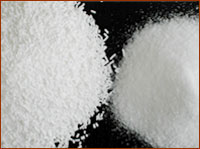
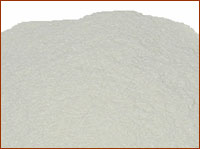
Chitin and chitosan are typically produced as flakes, with
higher grades offered in powder form. SC Shrimp Processing
& Biotechnologies, Inc. will initially offer high-quality
industrial-grade chitosan flakes, focusing on consistency
in the properties of the chitosan. Efforts will be made
to produce higher grades of chitosan, particularly medical-grade.
Chitosan will also be used to produce end-user products
that can be sold directly to the consumer, creating more
revenue and broadening SC Shrimp’s chitosan product
base.
|